
Understanding Dry Age-Related Macular Degeneration (AMD)
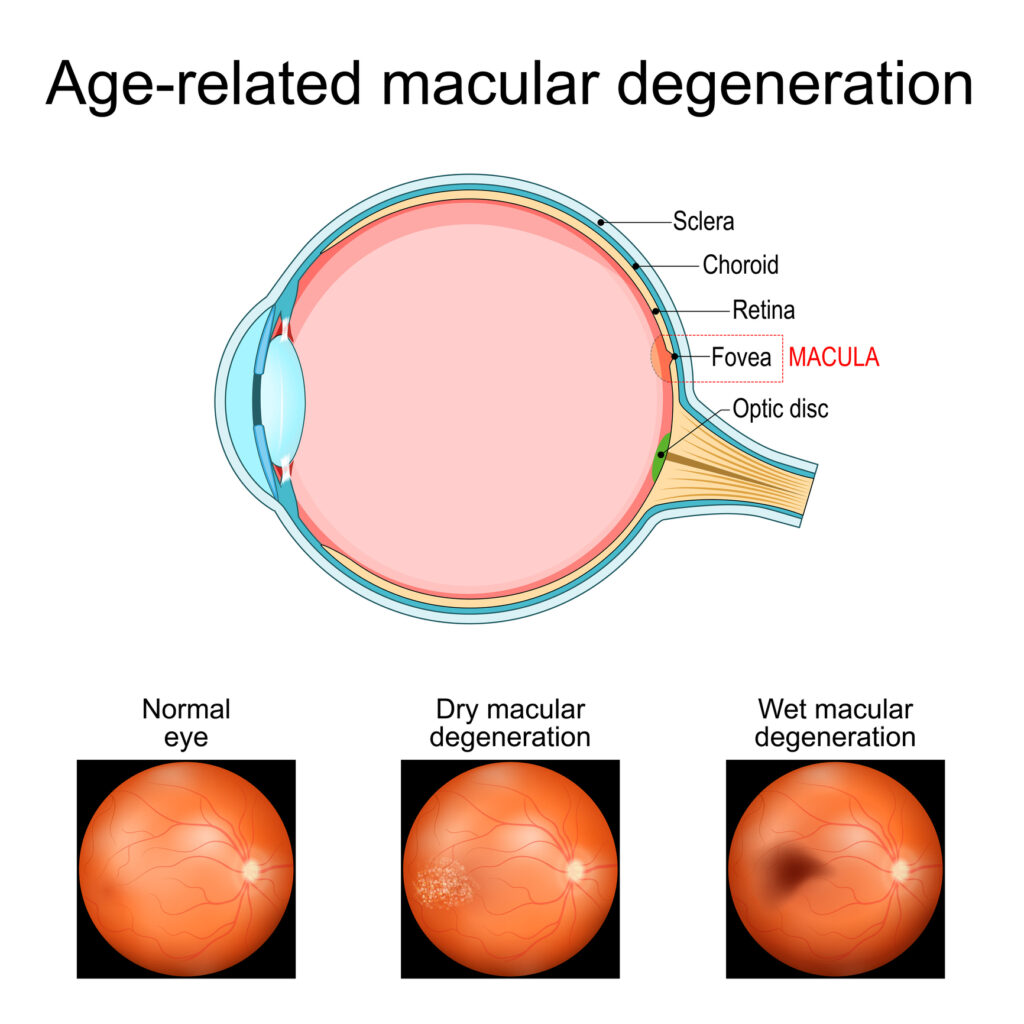
Dry Age-Related Macular Degeneration (AMD) is one of the most common causes of vision loss in adults over 65. It affects the macula, the part of the retina responsible for sharp, central vision — the vision you rely on for reading, driving, recognizing faces, and seeing fine detail.
Dry AMD is a progressive condition, meaning it typically worsens over time. While it does not cause complete blindness, it can significantly impact daily activities and overall quality of life.
Common Symptoms of Dry AMD
People with dry AMD may experience:
- Blurry or fuzzy central vision
- Straight lines appearing wavy
- Reduced color brightness
- Difficulty reading or seeing in dim lighting
- A central blurry or blank spot
Symptoms often develop slowly, which is why regular eye exams are essential for early detection.
What Causes Dry AMD?
While the exact cause isn’t fully understood, several factors increase risk:
- Age (most common in adults 65+)
- Family history or genetics
- Smoking
- High blood pressure
- Poor diet or low antioxidant intake
- Prolonged UV exposure
Lifestyle changes — such as quitting smoking, eating leafy greens, and protecting your eyes from UV light — can help support long-term eye health.
Treatment Options for Dry AMD
There is currently no cure for dry AMD, but several strategies can help slow progression and support vision.
Valeda® Light Delivery System
Valeda® Light Delivery System Valeda is the first and only FDA-authorized treatment shown to improve visual function in patients with early to intermediate dry AMD. Click the video below to learn more.
How It Works
Valeda uses photobiomodulation (PBM) — gentle, low-level light at three wavelengths (590 nm, 660 nm, and 850 nm) — to:
- Boost mitochondrial activity
- Increase cellular energy
- Reduce oxidative stress
- Support healthier retinal cells
Clinical studies, including the LIGHTSITE III trial, demonstrated that Valeda can improve vision by approximately one line on the ETDRS eye chart over two years compared to untreated eyes.
Who May Benefit
Valeda is intended for patients with:
- Best-corrected visual acuity between 20/32 and 20/70
- Medium or large drusen
- Non-central geographic atrophy
- No signs of wet AMD
Your eye doctor will determine whether Valeda is appropriate for your stage of AMD. To learn more about Valeda, click here.